Inside SIFIN’s Relentless Rise—and the Moment That Started It All
Preface
Great businesses often begin with a simple observation—something others see every day but choose to accept as inevitable. Occasionally, however, someone stops and asks a different question: Why does this happen, and can it be changed? This is the story of Charles Kwame Siaw and SIFIN.
At first glance, SIFIN’S rise appears to be a story about finance, entrepreneurship, and business growth. It is all of those things. But beneath the numbers lies a more profound story about empathy, resilience, and the determination to solve a problem that had quietly affected countless traders and importers for years.
The journey began not in a boardroom or a business school classroom, but at Tema Port, where a chance encounter exposed the human cost of a system that often left hardworking entrepreneurs vulnerable to circumstances beyond their control. What Charles witnessed that day would shape not only his career but also the lives of many people whose businesses and dreams depended on timely access to capital.
Over the years, that moment of compassion evolved into a mission. That mission became a business. And that business has grown into a company that is helping redefine how importers access financial support and commercial services.
This profile chronicles that remarkable journey—from a young trader learning the fundamentals of commerce to the founder of a fast-growing enterprise with ambitions that stretch far beyond Ghana’s borders. It is a story of seeing opportunity where others saw obstacles, of building trust in an environment often marked by uncertainty, and of remaining faithful to a purpose even as success arrives.
Most importantly, it is a reminder that the most enduring enterprises are not always born from the pursuit of profit. Sometimes, they begin with a moment of human connection and a determination to ensure that others do not suffer the same fate again.
The story of SIFIN is one such story
Heartbreak at Tema Port Plants a Seed of Hope
On the morning of December 7, 1994, the auction yard at Tema Port (ATLAS) in Ghana pulsed with noise and urgency.
Voices rose above crackling loudspeakers. Hands shot into the air as bidders fought over vehicles and imported goods. Deals were struck in seconds. Fortunes changed hands almost casually.
Amid the frenzy stood a woman in tears.
Most people never noticed her. However, Charles did.
It was his first visit to the port. He had accompanied friends who had just purchased a used 1992 vehicle at a government auction. As the celebrations unfolded around him, his attention drifted toward the woman standing quietly at the edge of the crowd, struggling to hold herself together.
CHARLES walked over.
“Madam, why are you sad?” CHARLES asked.
For a moment, she said nothing. Then, pointing toward a black AUDI A4 1991 model that had just been sold, she finally spoke.
“My car… they auctioned it,” she said softly. “I couldn’t pay the import duty. The bank refused me a loan because my account activity had dropped.”
The vehicle was gone. So was the money she had spent sourcing it, shipping it, and bringing it into the country (GHANA)
Charles stood still, absorbing what she was saying. Behind her words, he could already see the months of sacrifice, planning, and hope attached to that single asset. And now, just a few yards away, someone else was driving away with it.
“I am very sorry,” he said quietly, knowing the words could not repair the loss.
But something about that moment stayed with CHARLES. Not the bargains. Not the excitement. The pain.
“Yes, things were cheap,” Charles recalls today. “But while some people were laughing, others were crying.” That realization would eventually become the foundation of Sifin.
The Profit That Didn’t Feel Right
A few days later, Charles and his friends sold the car they had purchased at the auction, making nearly a 70 percent profit.
By every business measure, it was a successful deal. Yet the profit unsettled him.
Each time he returned to Tema Port, he began noticing the same pattern repeating itself: while some traders celebrated winning bids and quick sales, others quietly watched years of savings disappear because they could not access money quickly enough to clear their goods.
For many importers, the problem was not bad business. It was timing.
In a system governed by strict deadlines, a delay of days—or even hours—could mean losing everything.
Most people accepted this as part of doing business. Charles did not. He began asking a different question: What if the real problem wasn’t the traders, but the financial system surrounding them?
When Empathy Became Strategy
At the time, Ghana already had financial institutions serving specific sectors. Agricultural banks supported farmers. Bank of Housing finance institutions supported construction and real estate.
But importers—despite driving a significant part of commerce—often had nowhere to turn when short-term financing gaps threatened their businesses.
Charles saw an opportunity hidden inside the crisis.
What if someone built a system designed specifically for importers?
What if financing could move at the speed of the port itself?
That conviction became the beginning of Sifin Enterprises.
The company was founded with a simple but urgent mission: prevent traders and importers from losing their goods simply because funding arrived too late.
This was not just about lending money.
It was about preserving livelihoods, protecting investments, and restoring dignity to entrepreneurs trapped by timing.
The Mechanic Who Learned to See Value differently
To understand SIFIN, it helps to understand the man behind it.
Born in Ghana’s Eastern Region on June 30, 1973, Charles describes himself as a “free-hearted man” who loves people, business, and worship music.
Long before SIFIN existed, he was already immersed in trade.
As a mechanic, he spent years repairing damaged vehicles from workshops and junkyards, restoring them and reselling them by the roadside. The work taught him how to recognize value where others saw loss.
That mindset would later define his approach to business. Where traditional financial institutions often saw risk, Charles saw potential. Where others saw defaults, he saw temporary setbacks.
“I don’t call it default,” he says. “I call it delay.” The distinction matters to him.
For Charles, business is not built on punishment. It is built on relationships, patience, and practical solutions.
That philosophy became one of SIFIN’s defining traits.
Built in the Trenches. There was no grand launch. No corporate unveiling. No polished business plan.
Charles simply started where the problem existed: at the port itself. “I stopped buying,” he says. “Instead, I started giving them the money”, he adds.
That shift—from trader to financial enabler—became the turning point.
Working with a small number of importers, he began offering short-term financing to help them clear goods before auction deadlines expired. The model was straightforward: provide fast capital, secure the assets, and give traders enough time to sell and repay.
In the early days, the business operated almost entirely on trust. There were no sophisticated systems. No institutional backing. Reputation was everything.
And at Tema Port, reputation travels quickly. Each recovered shipment became another referral. Each saved consignment became proof that the model worked. SIFIN grew not through advertising, but through stories.
From Financing Company to Commercial Ecosystem
As demand increased, Charles realized financing alone could not solve the deeper problem.
Importers were navigating a complex web of customs procedures, clearing delays, logistics bottlenecks, and market uncertainty. So SIFIN evolved.
The company expanded beyond financing into a broader commercial support system that included:
• clearing forwarding services,
• duty payment support,
• International procurement support
• logistics coordination,
• and a marketplace that helped clients sell inventory faster.
Rather than simply handing over funds, SIFIN became deeply involved in protecting and managing the underlying assets. In an unpredictable environment, the company offered something rare: certainty.
The Challenge of Scaling an Unconventional Model
Traditional financial institutions struggled to understand SIFIN’s operating model. Their systems were built around fixed repayment schedules and predictable cycles.
Shipments are delayed. Markets fluctuate. Inventory sometimes takes time to move.
At critical moments, those differences created friction with potential financing partners. But Charles refused to force importers into rigid systems that ignored commercial realities.
Instead, he redesigned the model around flexibility. Repayment structures became adaptive. Processes became more responsive. The business was built around how importers actually operated—not how financial theory assumed they should operate.
It was unconventional. But it worked.
The Partnership That Accelerated Everything
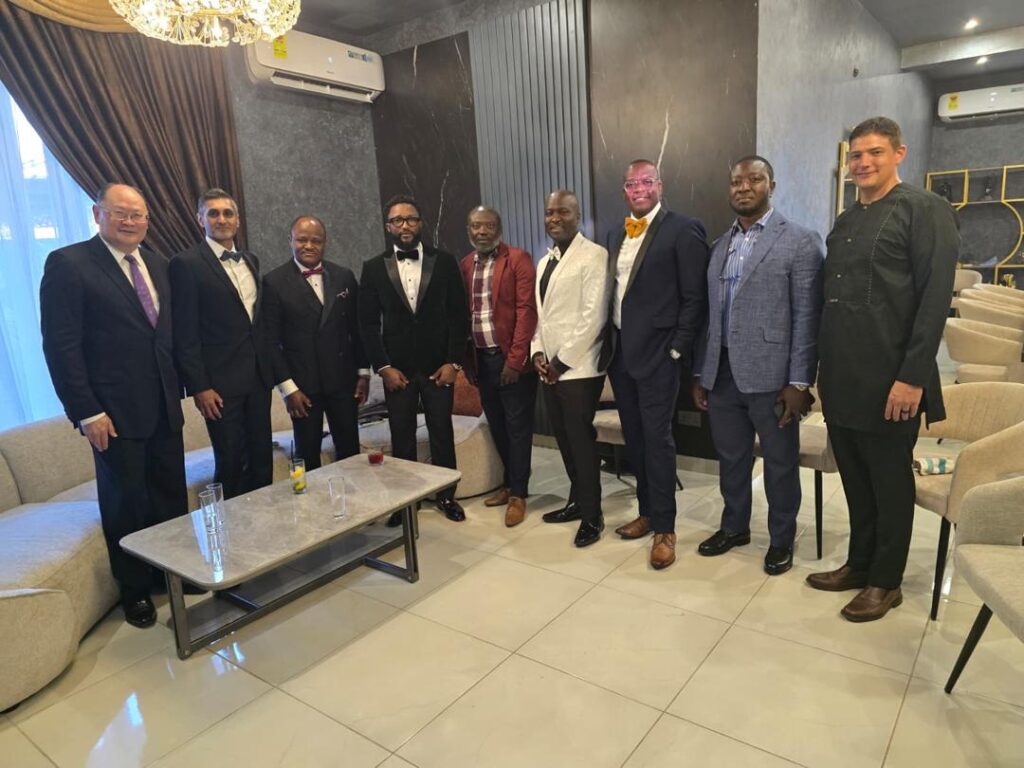
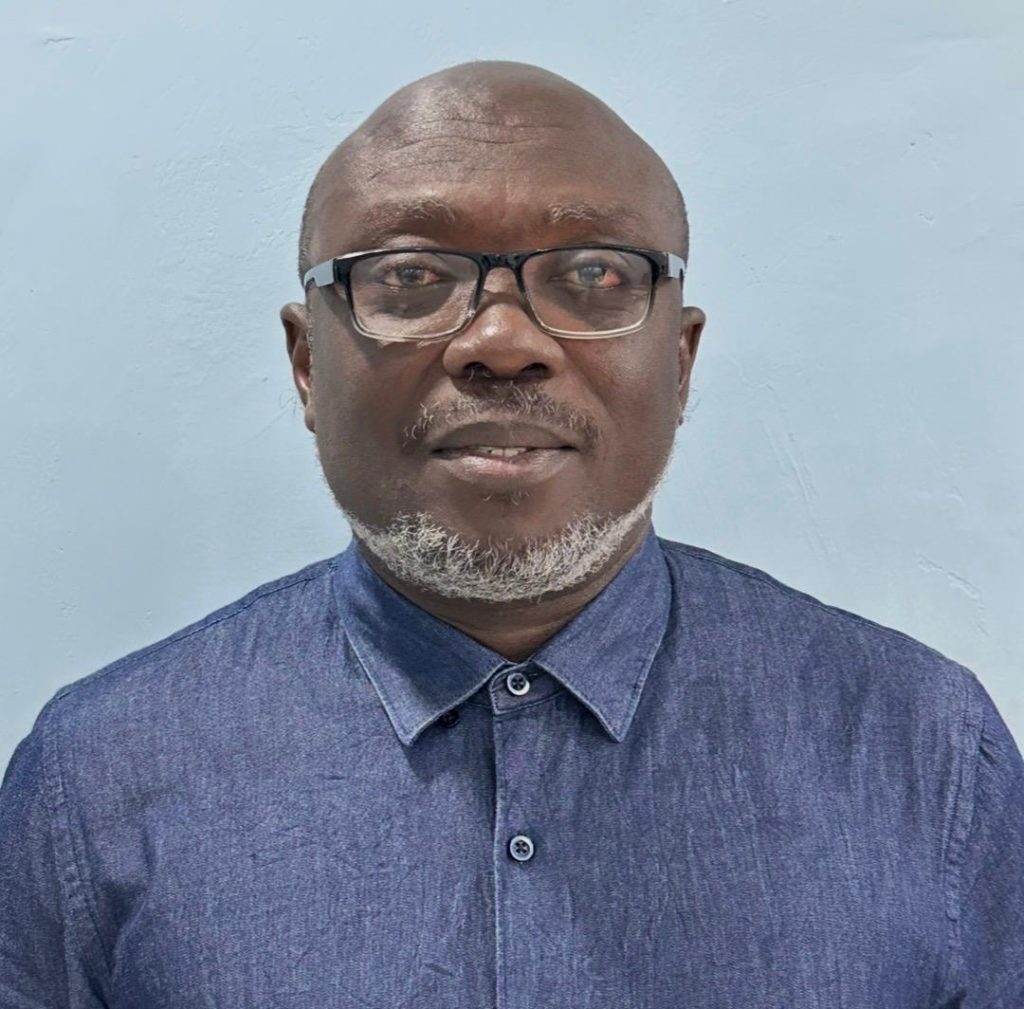
The Company’s trajectory changed dramatically when SIFIN partnered with GIAC and Maxbalo in April 2025.
For Charles, the partnership represented more than access to capital. It brought operational structure, strategic support, and leadership development at a critical stage of growth.
“That is when things got serious,” he says. According to Charles, one of the biggest advantages was speed and flexibility. “I just call Maxwell,” he says. “They have never told me no”, he adds.
The partnership also helped strengthen SIFIN’s management capacity. Through the network, the company (SIFIN ) recruited senior executives in banking sector, including whose prior experience at a major Ghanaian financial institution helped professionalize operations as the business scaled.
Charles was also assigned a business coach through the partnership to support strategic planning and execution. The results came quickly.
Within months:
• monthly revenue reportedly climbed from roughly $20,000 to nearly $1 million,
• the team expanded from four employees to Seventeen (17),
• and operations grew beyond Tema Port, Takoradi port into Kotoka International Airport and Aflao Boader inland Port corridor.
Yet for Charles, the most meaningful change was not financial. “The pressure has gone down,” he says. “It is calm around the office.” Then he smiles. “My customers smile more now. They believe I can solve anything.”
The Stories That Built the Brand
One story still captures the company’s reputation better than any financial metric.
A trader arrived at SIFIN after eight vehicles had already been confiscated. Deadlines had passed. Options were disappearing. SIFIN intervened immediately.
Within hours, the company managed to navigate the system and secure the release of all eight vehicles. For the client, the recovery meant more than avoiding financial ruin. It restored confidence.
Today, that same trader reportedly refers numerous customers to SIFIN —many of whom trusted the company long before meeting Charles personally.
In environments shaped by urgency and uncertainty, trust spreads quickly. And businesses that consistently appear in moments of crisis often become more than service providers. They become lifelines.
A Bigger Vision Emerging
Across Africa, countless entrepreneurs face the same challenge Charles witnessed decades ago at Tema Port: valuable businesses constrained not by ambition, but by access.
SIFIN’s rise offers a different model—one built as much on empathy as economics. The company’s story is ultimately not just about finance. It is about seeing overlooked problems clearly enough to build around them.
Today, SIFIN is entering a new phase:
• new headquarters are under development,
• operations are expanding across borders,
• and partnership networks continue to deepen.
At the center of that expansion is an even larger ambition.
One story still captures the company’s reputation better than any financial metric.
A trader arrived at SIFIN after eight vehicles had already been confiscated. Deadlines had passed. Options were disappearing. SIFIN intervened immediately.
Within hours, the company managed to navigate the system and secure the release of all eight vehicles. For the client, the recovery meant more than avoiding financial ruin. It restored confidence.
Today, that same trader reportedly refers numerous customers to SIFIN —many of whom trusted the company long before meeting Charles personally.
In environments shaped by urgency and uncertainty, trust spreads quickly. And businesses that consistently appear in moments of crisis often become more than service providers. They become lifelines.